Iran-aligned Militias Threaten Iraqi Airport Disruptions
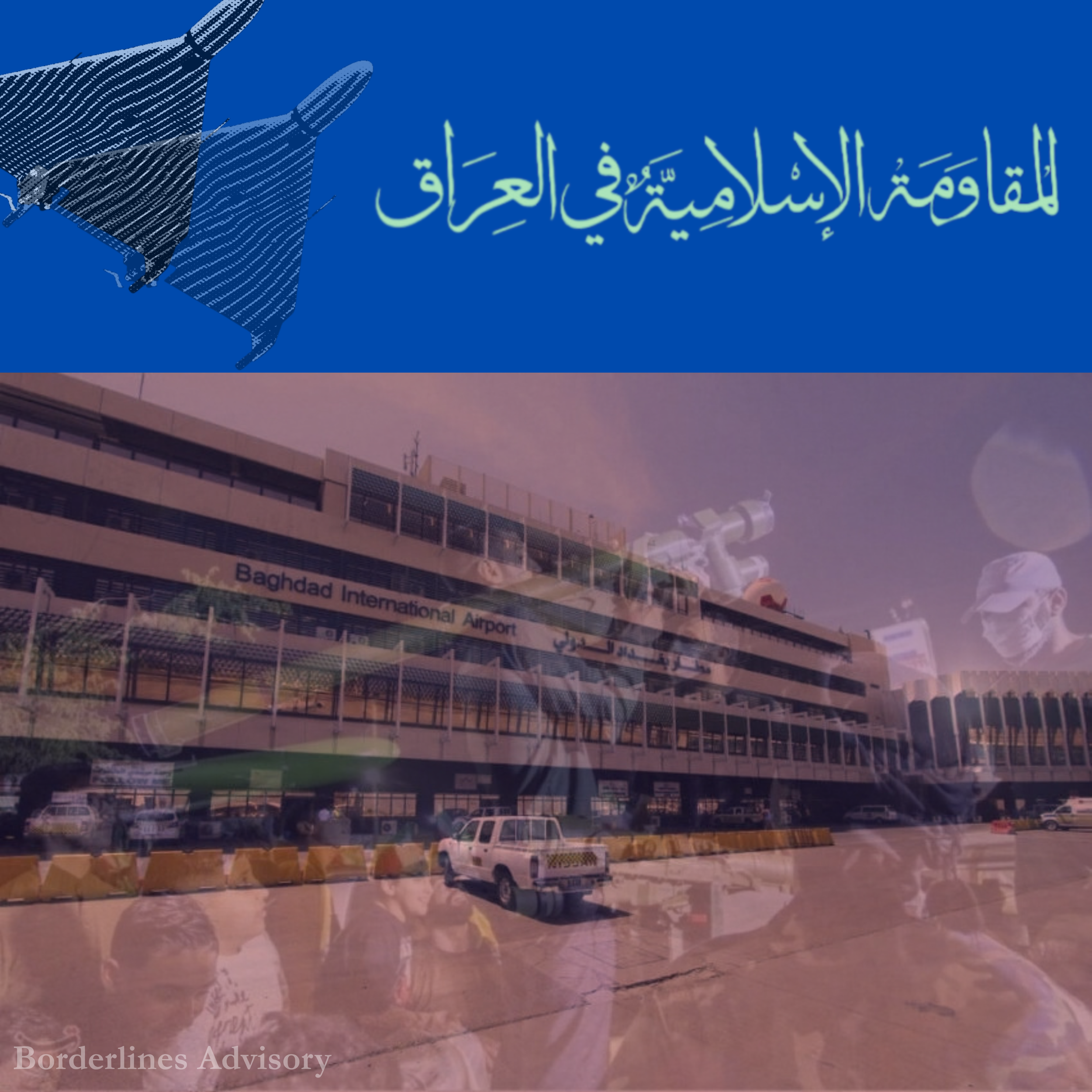
As a U.S.-driven measure halts flights between Iraq and Iran, including those to and from Najaf International Airport, Iran-aligned militias are leading the loyalist camp's rejection of the move.
DEVELOPMENT
At 2100 local time on 25 September, Akram al-Ka'abi, Secretary-General of Harakat al-Nujaba (HAN), issued a statement threatening to mobilize supporters for sit-ins at Iraqi airports unless the suspension is lifted. Ka'abi also called for breaking U.S. hegemony and rebuked the governing parties for acquiescing to Washington's demands. Earlier, at 1830 local time, Kata'ib Hezbollah (KH) said that any ground handling company complying with the U.S. decision "has chosen for itself the role of a submissive backer of the U.S. and Zionist decision."
The statements came on the same day that Mohammad Mokhber, a senior Iranian official, threatened to disrupt air traffic across the region, warning that "if Iran cannot operate flights and receive aviation services at airports, no other country in the region will be able to do so either."
WHY IT MATTERS
HAN's threat to mobilize at airports and KH's implicit threat against ground handling companies are complementary. Together, they could paralyze Iraqi aviation and effectively enforce, inside Iraq, Mokhber's threat to disrupt regional air traffic in response to the sanctions. The statements are likely to prompt other militias to follow suit and amplify the threats. Both groups and the broader ‘Islamic Resistance in Iraq’ umbrella are capable of mobilizing loyalist tribal networks to sustain street mobilization momentum against the Iraqi government.
If sit-ins materialize, aviation security risks in Iraq will rise. Senior managers at ground handling companies and possibly government bodies will likely face harassment, and even threats of physical violence and kidnapping, from militia affiliates or tribal proxies. Such a scenario is more likely to materialize if the ongoing crisis persists. For example, Iran-aligned groups have long threatened Iraqi intelligence officials they perceived as complacent with the U.S. in Iraq.
The continued suspension of flights between Iraq and Iran will very likely trigger pro-Iran sit-ins, with turnout boosted by the postponement of the new school year in federal Iraq to 1 October. Airport protests, along with the shift to overland travel between Iraq and Iran, are likely to worsen inter-city traffic, as well as entry points to cities, notably Baghdad.
SO WHAT
An escalating militia campaign may play out on social media, with threats carrying AI-generated graphics that depict MANPADS being used against airliners still operating in Iraq and the region. Iran-aligned groups have long used graphics to convey threatening messages. An actual surface-to-air attack on an airliner is very unlikely.
The use of unmanned aerial vehicles (UAVs) and rockets against targets in and around Iraqi airports is well documented, and such attacks are routinely attributed to Iran-aligned militias. In a January 2022 incident, Katyusha rockets struck an out-of-service Iraqi Airways Boeing 767 at Baghdad International Airport. More recently, in March 2026, 122mm Grad rockets destroyed an Iraqi Air Force Antonov-132 at a military airbase in Baghdad. While these aircraft were likely collateral damage, a scenario in which militias deliberately use such capabilities to disrupt aviation cannot be ruled out should the current crisis persist.
A continuing flight ban may increase militia appetite to apply further pressure on the Iraqi government by mobilizing loyalists in the vicinity of the Green Zone in Baghdad, hosting the U.S. Embassy.
*This report was updated on September 27
